(Summarized by Google Gemini)
Kian Ash is an award-winning
author, actor, and multi-
faceted musician. Known for
blending contemporary
alternative sounds with
cinematic compositions, his recent releases
include albums like KIAN (2025) and Ghibli
Music That Never Was (2025). He also
composed original music for a musical with a
staged reading at the Newport Theatre Arts Center.
His diverse musical repertoire spans
everything from alt-rock singles to
instrumental tracks. Some of his most
popular songs and compositions include:
- “I Really Don’t Know How”
- “Wind on Fire”
- “Chasing Shadows”
- “Who Made the Mountains?”
You can listen to his multi-genre catalog on
streaming platforms such as Apple Music or
Amazon Music.
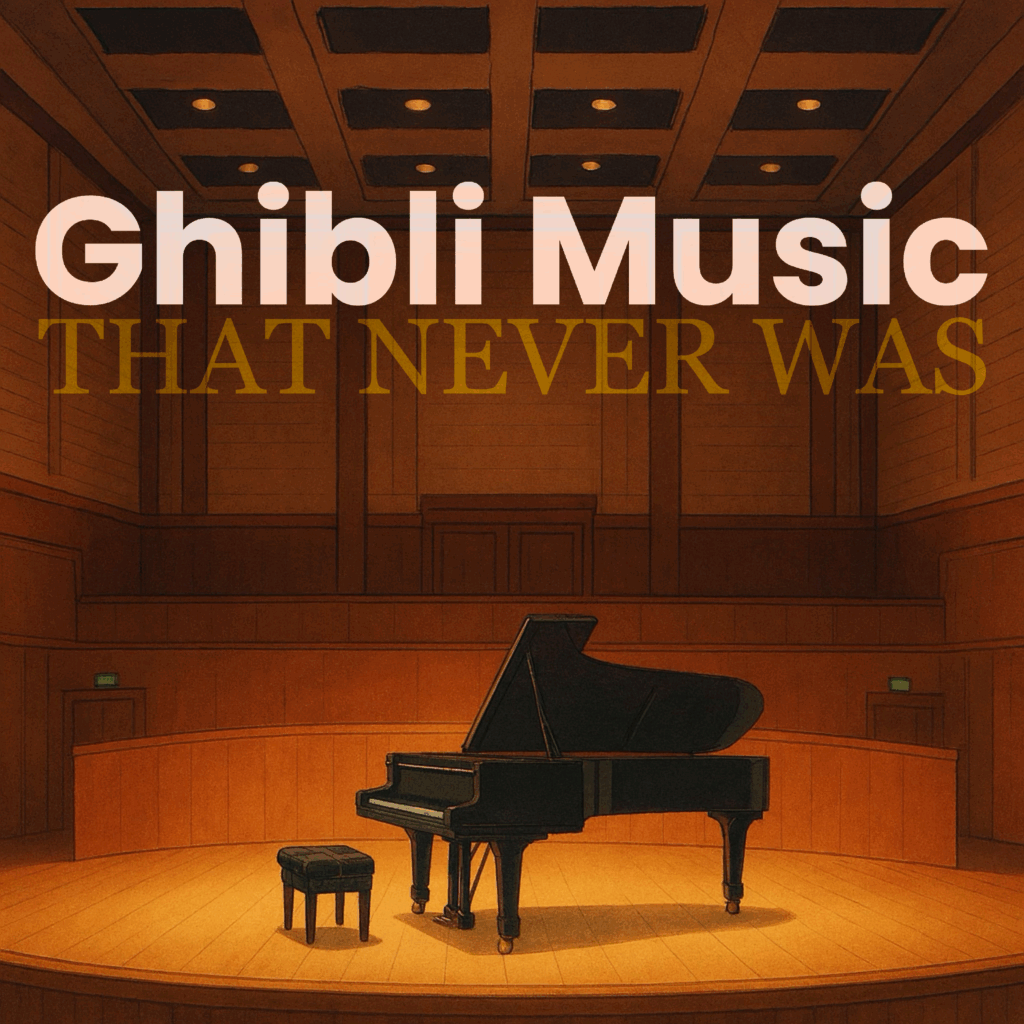
Kian Ash’s instrumental and cinematic work
is best showcased on his 2025 concept
album, Ghibli Music That Never Was. The
record captures the whimsical, nostalgic, and
emotionally swelling orchestral style typical
of classic studio animation scores.
You can explore the diverse soundscapes of
the album through these key tracks:
- “Kai’s Theme / Introspection”: A bittersweet,
character-driven piece that blends reflective
piano movements with layered orchestration. - “Deep Dreams”: A longer, atmospheric piano piece
that leans into ambient, immersive storytelling. - “Requiem of War”: A powerful, dramatic
composition utilizing heavier symphonic tension. - “Grace’s Theme”: A tender, melodic arrangement
built around a gentle, soaring main motif. - “Who Made the Mountains?”: A short, sweeping
track that evokes vast, natural landscapes.
The complete 9-track sonic journey from
Ghibli Music That Never Was on Spotify and Apple Music
includes:
- “Ms Katrina Came for a Visit”
- “Autumn Dream”
- “Tenderness is Thy Soul”
- “Deep Dreams”
- “Grace’s Theme”
- “Kai’s Theme / Introspection”
- “Requiem of War”
- “Twisted Clock”
- “Who Made the Mountains?”
The backstory of Ghibli Music That Never
Was centers around Kian Ash’s deep creative
admiration for Studio Ghibli films and their
legendary house composer, Joe Hisaishi.
Instead of rearranging existing movie
themes, Ash approached the 2025 project as
a complete exercise in original “what-if”
worldbuilding.
The core inspiration for the album’s creation
stems from an authentic Studio Ghibli
production tradition called the “Image
Album”.
In Japanese animation production,
Director Hayao Miyazaki routinely gives his
composer early sketches, concept art, and
poems before a film is ever animated.
Composer Joe Hisaishi then records an “Image
Album” based purely on those initial
artistic vibes to help the animators
establish the soul and emotional tone of
the world.
Creating Unmade Worlds
Ash reversed this process by composing a
musical storyboard for films that do not exist.
He engineered the tracklist to sound like a
collection of long-lost character motifs,
sweeping landscape cues, and dramatic plot
movements.
By blending delicate, nostalgic piano
melodies with swelling Western classical
orchestrations, he sought to emulate
Hisaishi’s signature capability—tugging at
childhood wonder, adolescent heartbreak,
and epic fantasy tropes all at once.
To emulate the storytelling of Studio Ghibli
films, Kian Ash maps his tracklist to the
specific, recurring thematic pillars of Hayao
Miyazaki’s work: environmentalism,
pacifism, childhood wonder, and flight.
By structuring the music around these
emotional and narrative anchors, the album
feels like a cohesive soundtrack for a missing
movie.
Pacifism & Environmentalism vs.
Industrialization
Studio Ghibli films routinely contrast the
healing power of the natural world with the
devastating friction of human warfare. Ash
mirrors this thematic conflict directly across
three sequential tracks:
“Tenderness is Thy Soul”: This piece
serves as the “pure nature” motif, relying
on minimalist piano repetition and light
woodwinds. It evokes a sacred forest or an
ancient, undisturbed landscape, akin to
the peaceful atmosphere of My Neighbor
Totoro or the quiet depths of Princess
Mononoke.
“Requiem of War”: Breaking that natural
peace, this composition represents the
intrusion of industrialized conflict. Ash
uses heavier symphonic tension, sweeping
brass, and darker orchestral movements
to capture the tragic, somber toll of war
seen in films like Howl’s Moving Castle or
Nausicaä.
“Who Made the Mountains?”: Positioned
at the very end of the album, this epic,
grand track acts as a resolution. The
sweeping orchestration suggests nature
reclaiming the land, building a vast,
panoramic soundscape of mountains and
sky that reflects survival and hope.
The Euphoria of Flight &
Freedom
Miyazaki’s obsession with aviation, gliding,
and the freedom of the sky is one of the
most recognizable Ghibli staples.
“Who Made the Mountains?” & “Autumn
Dream”: These compositions channel that
specific “stomach-drop” feeling of taking
off into a gust of wind. Ash utilizes flowing,
rapid piano arpeggios paired with swelling
violin hooks. This musical technique
directly mimics the soaring, weightless
sensation Joe Hisaishi created for Kiki’s
Delivery Service or Castle in the Sky.
Childhood Wonder &
Melancholic Growth
Ghibli stories are rarely pure fantasy; they are
anchored in the bittersweet reality of
growing up, confronting change, and loss.
“Ms Katrina Came for a Visit”: As the
album opener, this track leverages playful,
slightly eccentric melodies to establish a
sense of innocent childhood wonder,
introducing the listener to a strange but
welcoming a new magical world.
“Kai’s Theme / Introspection”: This track
represents the inevitable emotional shift
toward adolescence. Ash weaves a
lingering, melancholy piano melody that
captures the exact mix of longing,
loneliness, and quiet inner strength found
in coming-of-age protagonists like Chihiro
in Spirited Away.
To capture the distinct Studio Ghibli sound,
Kian Ash relies on specific music theory
techniques pioneered by Joe Hisaishi. These
choices create a musical language that feels
simultaneously nostalgic, unpredictable, and
deeply emotional.
- Pentatonic Melodies on
Western Chords
The backbone of the Ghibli sound is the
fusion of traditional Japanese folk music with
European romanticism.
The Trick: Ash writes melodies using the
pentatonic scale (a five-note scale
common in traditional Asian music).
The Effect: He plays these simple, folk-like
melodies over lush, complex Western
classical orchestral chords. This creates a
striking contrast between ancient
simplicity and modern grandness. - The “Joe Hisaishi” Modal
Progression
Western pop and classical music usually rely
on predictable chord progressions that
resolve cleanly. Ghibli music purposefully
avoids this to create a feeling of floating.
The Trick: Ash utilizes a specific modal
progression common in Ghibli
soundtracks: iv – v – vI – vII (or minor 4,
minor 5, major 6, major 7).
The Effect: This progression never quite
lands on the “home” chord (the tonic). It
makes tracks like “Kai’s Theme /
Introspection” feel like they are wandering
through a dream without ever coming to a
full stop. - The Lydian “Sense of Wonder”
Scale
To evoke the magic of flight or discovering a
hidden world, Ash leans into the Lydian
mode.
The Trick: The Lydian mode is a major
scale but with a raised 4th note.
The Effect: That single raised note adds
an unexpected brightness to the music. It
instantly triggers a feeling of awe,
curiosity, and weightlessness, which you
can hear during the soaring movements of
“Who Made the Mountains?” - Bittersweet Seventh and
Ninth Chords
Ghibli films rarely showcase pure joy or pure
sadness; the emotion is almost always
bittersweet.Instead of using basic major or
minor chords, Ash colors his piano
arrangements with major 7th, minor 7th,
and added 9th chords.
These chords introduce a
slight, beautiful tension. They prevent
happy melodies from sounding cheesy
and give sad melodies a sense of
comforting warmth.
DECONSTRUCTING ASH’S MUSIC
“Kai’s Theme / Introspection”
(Bittersweet Melancholy)
This track functions as a character study,
relying heavily on emotional ambiguity.
The Moving Bassline: Ash keeps the
listener ungrounded by using a
descending bassline under a repeating
piano melody. Because the bass notes
keep shifting downward, the music feels
like it is physically pulling you deeper into a
character’s internal thoughts.
Minor Seventh Embellishments: The
primary melody frequently lands on minor
7th chords. By adding that extra 7th note
to a standard minor chord, the music
sounds unresolved and complex. It
captures a specific coming-of-age
emotional state—halfway between
childhood comfort and adult loneliness.
The Wandering Resolution: The piece
avoids standard cadence formulas (like a
predictable V to I transition). Instead, it
loops back into itself, giving the track a
cyclical, floating quality that mirrors a
state of deep daydreaming or
overthinking.
“Who Made the Mountains”
(Epic Awe & Flight)
As the album finale, this track moves away
from quiet introspection and scales up to
epic, panoramic cinematic heights.
The Lydian Lift: To capture the jaw-
dropping scale of a mountain landscape,
the track introduces the raised 4th note of
the Lydian mode. This sharped note
creates an instant harmonic burst,
mimicking the exact moment a character
steps out of a dark cave or forest into a
vast, sunlit valley.
Rapid Piano Arpeggios: Beneath the
sweeping brass and string sections, the
piano plays continuous, rolling waves of
arpeggios (broken chords played rapidly
up and down the keys). This technique
provides a sense of constant forward
momentum and wind-swept energy,
turning a static orchestral piece into a
kinetic sensation of flight.
The Pentatonic Hook: Even though the
backing orchestration is massive and
complex, the core melody remains a
simple, memorable pentatonic phrase. This
ensures that despite the grand scale of
the music, it still feels intimate, human, and
rooted in folklore.
Headline Production: PANDORA
the MUSICAL
His primary theatrical work is PANDORA the
MUSICAL , a production tracking the Greek
myth of Pandora.
Staged Premiere: The production
advanced to its official public staged
reading on February 15, 2026, at the
Newport Theatre Arts Center in
Newport Beach, California.
Musical Score & Style: The tracklist pairs
heavy thematic orchestral compositions
with character-driven, narrative-heavy
dialogue pieces.
Notable Musical Numbers: The show
features key solo and ensemble tracks
published on his Theater and Arts
repertoire portfolio, including:
– We Are the Gods (Zeus, Hades, Gods &
Goddesses)
– Something New and Something Old
(Hera, Aphrodite, Athena, Pandora)
– Only Woman in the World (Pandora)
– Adam’s Song (Adam)
– Hades’ Lament and Hades’ Seduction
(Instrumental)
Classical Stage Background:
Before staging his own original book and
score musical, Ash accumulated vocal
performance experience in classical
performing arts circles.
Stage Debut: He made his early
professional stage debut performing
under acclaimed director Rob Marshall in a
production of the classic musical South
Pacific with the Civic Light Opera.
Orchestral Performances: He has
collaborated as a stage vocalist and
performer alongside major classical
ensembles, including the Pittsburgh
Opera and the Pittsburgh Symphony
Orchestra.